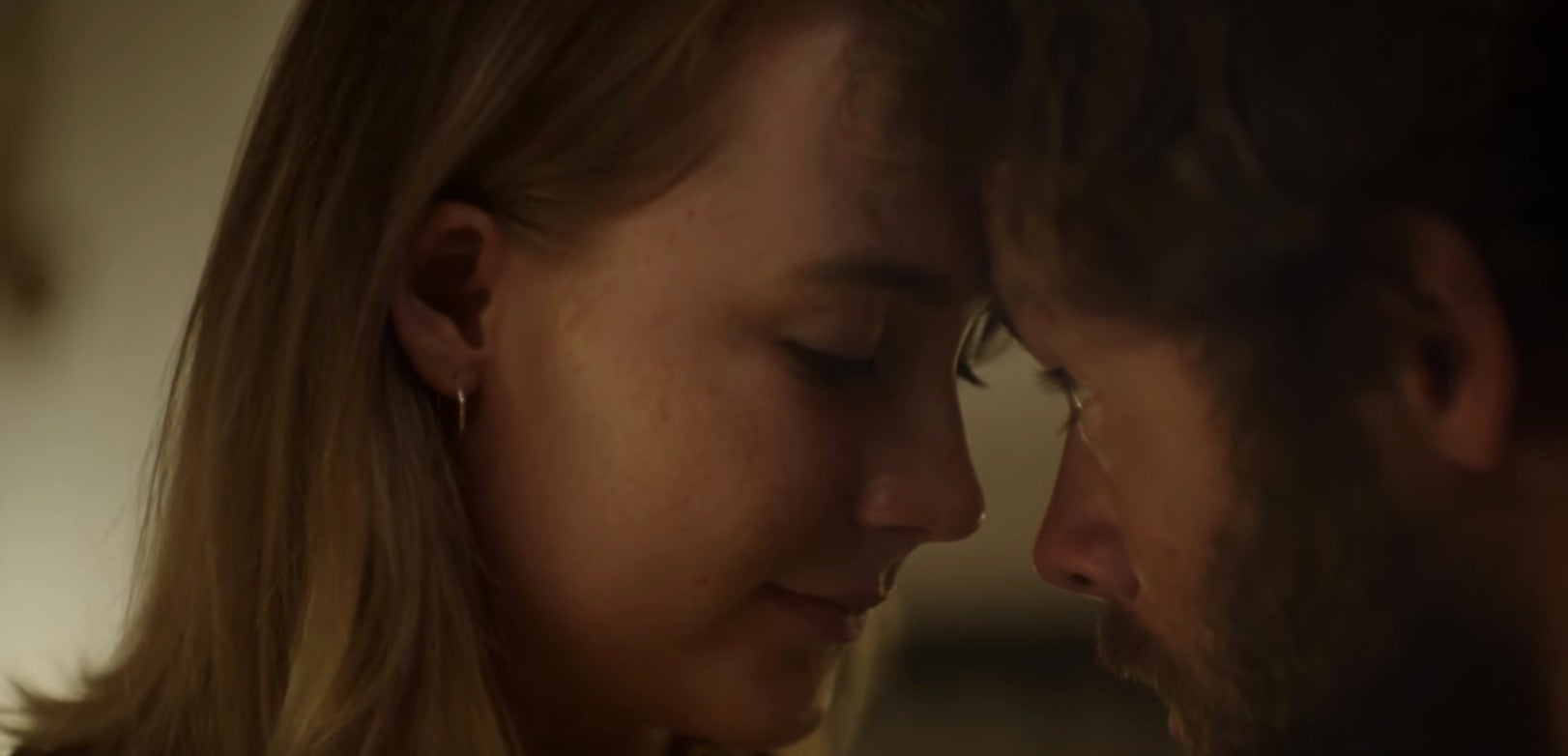
Thursday, March 9, 2017

Woman Empowerment: Jealous or Crazy?

In light of yesterday being International Women's Day, I thought it quite fitting to analyze the queen of feminism herself, Beyoncé. Beyoncé's latest creative album, Lemonade, expresses the trivialities that women often go through at the hand of men. Out of the many songs in the creative album, I found one song titled "Hold Up" to be particularly symbolistic of women's movement from oppression to empowerment.

For reference purposes, you may find the full segment of Beyoncé's music video for "Hold Up," here.

The music video "Hold Up" begins with Beyoncé being submerged under water saying in a defeated sounding vocal tone, "I tried to change... Closed my mouth more, tried to be softer, prettier, less awake." This first line is already hinting towards the male gaze which supports the idea that a woman should be quiet, attractive, and know her place to not have an opinion. With little movement and no room to breathe, it shows that she is just going through the motions of life, not really living.

Photo taken from Google Images

As the video progresses, Beyoncé is shown in a normal bedroom setting - though still under water. This symbolizes the oppression she felt by man, despite her efforts to keep a normal life. The continuation of this first scene begins to pick up pace while she seems less complacent to the oppression of her male counterpart; she begins to fight and struggle with the water surrounding her signifying her dissatisfaction with remaining oppressed.

Then, as she comes to terms with the question that troubles her most -"Are you cheating on me?"- the scene changes and she bursts out of the oppressive bounds of the water (i.e. her male counterpart) dressed in a jaw-dropping, bright yellow gown. This moment can be taken as her realization of her oppression and by fighting against it, she accomplished freedom. However, she is still soaked by the water suggesting that though she has broken through the oppression, it has left its mark on her to some degree.

Gif taken from Google Images

She then goes on to accept that she can't and won't change herself to make a man feel more empowered. Instead, she accepts that she is hard around the edges and speaks her mind; in the music video you can tell that this acceptance frees her. She struts down the street, showing her individual power without any man to hold her down.

For the remainder of the music video, Beyoncé powerfully destructs items around her with a bat such as shop windows, old masculine muscle cars, a fire hydrant, and a security camera. Each of these destructions symbolize her ridding herself of the bounds that man held over her. Her actions represent the fierceness of women - actions that in itself could inspire a movement of female empowerment.

While it is largely known that Lemonade was a personal work for Beyonce, it is able to connect with the broader spectrum of women in order to empower them - they can overcome the oppression of men too.


MKG "Bad Things"

I studied Machine Gun Kelly’s & Camila Cabelo’s “Bad Things,” through a feminist perspective. This music video portrays two people, perhaps social outcasts, who are in a relationship, and have been good friends for a long time, who essentially do morally questionable acts together. They drink, leave restaurants without paying and run through an abandoned warehouse. It shows them enjoying their indulgence in their behavior, together in ways which they find uncontrollable, as if they are incapable of their attraction. Initially, this may seem to reflect a gender equality between the sexes; after all, they are both participating in this relationship doing “bad” things. The leading female singer is shown in many scenes on her own, apart from the leading man, as if to emphasis her independence. However, there are just as many scenes, if not more, which show her together with him. I believe that the message underlying this video is ultimately dis-empowering for both genders because it essentially positions these people in a dynamic where they are unable to control their behavior and rely on each other for stability. Because both of the singers are together expressing their affection through each other, albeit in a self-destructive way, there is a sense of equality for both genders: they both do bad things to each other as a way of communicating. The female starts the opening song, and, in this sense can be said to be in a position of power because she has led the song. Based on Lana Rakow’s “Feminist Approaches to Popular Culture: Giving Patriarchy its Due” with her “Reception and Experience Approach” to analyze this video, it appears that, however, her position of power is, in some ways determined by her relationship with the male. That, without him, she would not have the power to exert control. Is her dominance in that case, dependent upon a male, or is that the only way she can effectively assert agency, through a relationship and destructively? Now, in some ways, she appears to have comparable agency as the male in relation to this scenario because both are low functioning, living destructively. Yet, the woman is seen in more scenes as sitting—for instance on the chair in the warehouse. Taken out of context, this can be analyzed as her sitting in subservience, that is, if we are to view sitting as a more passive act. In that case, you could also say that she is inept to her circumstances through the portrayal of immobility. Simultaneously, the camera is also, at times, showing extreme close ups where she is alone in the room, and therefore the “center” of our attention, as if to assert her separateness from the male singer, and thus we might presume that she is choosing to participate in these bad decisions with him, rather than being compelled to. Our attention is captivated by her eyes, but it is difficult to ascertain whether this is a seductive stare with which she gazes or just her embracing her femininity. At what point does beauty become objectification? 

Pretty Hurts


Amongst the feminist music videos released in the past decade, the video that speaks to more young adults and teenagers than others is Beyoncé’s Pretty Hurts. The video takes place at a beauty pageant filled with small waisted girls who are not content with themselves. The opening scene shows a behind the scenes look of the pageant where the girls do not get along and are frantically getting ready. 

Throughout the video, the viewer sees the girls forcing themselves to throw up, eating things they shouldn’t, and looking miserable only to be paraded in front of judges and a crowd. For many girls, this music video is a reality and Beyoncé wanted to let girls know that pretty does hurt and that all that really matters is that you’re happy.

Beyoncé’s message for this video is rather clear. Girls should not change their bodies and torture themselves to please others. Listening to the lyrics of the song, she states, “Shine the light on whatever's worse/ Tryna fix something/ But you can't fix what you can't see/ It's the soul that needs the surgery (MetroLyrics).” This part of the chorus very accurately represents society’s push on the way girls should look and feel about themselves.

Beyoncé truly takes a feminist political and social stance with this song and video. Her criticization of beauty pageants and what they mean translates into the deeper meaning of the video. Girls need to block out any push from society or even people they know. We need to understand that it is better to be ourselves and be happy than try to be something we are not and miserable.

As stated by Lana F. Rukow, “Feminists are saying that popular culture plays a role in patriarchal society and that theoretical analysis of this role warrants a major position in ongoing discussions.”

As a feminist who plays a large role in popular culture, Beyoncé disobeys the social norms of disregarding the feminist movement. By creating this potentially controversial video, she has given a voice to girls who do not feel like themselves in their own skin. She lets them know it is okay to be different, as long as they are happy with themselves.

In terms of the video itself, the turning point for the character Beyoncé plays is when she responds to the question she is asked during the competition. She responds that her aspiration in life is to be happy. This small scene of the music video carries the most weight when it comes to the meaning. A response that she wants to be happy gives off the impression that she is not happy with where she is in that moment.

Another monumental point in this video is when Beyoncé knocks down all of her beauty pageant trophies. This symbolizes her breakdown of giving into societal norms. Her jumping into the pool with her dress and sash on also represents her cleansing herself of all judgement in her journey to become as happy as she can be.

Many girls in American society can relate to pleasing others, rather than themselves. Through this video, Beyoncé inspires girls and women everywhere to ignore the social norms and embrace who they are.

Beyoncé did a phenomenal job with the production and message of this video. She allows girls to see that they should love who they are regardless of what others or society may think. Her large influence on popular culture today plays a big role in broadcasting this message of acceptance of oneself.

It is important for girls to know that while pretty might hurt, it doesn’t have to and if Beyoncé says it, it must be true.


Summer

Calvin Harris’s song “Summer” sounds like a song about a summer romance between two people. It is about a man reminiscing about good times that he spent with a woman. The music video, however, distorts this messages and adds a layer of objectifying women with male gaze.

The music video is full of scantily clad females being sultry in everything that they do. Shots include and woman in a bathtub, a woman lounging on a bed in her underwear, women in bikinis hanging out around a pool, even women at a car racetrack wearing booty shorts and heels. If someone is at a racetrack to work on cars and race, they are not going to be wearing heels. Even when doing an activity that is not sexy, the women in this video are turned into sexual objects.

This music video has no feminism in it. It objectifies women, giving off the message that their purpose is to wear revealing clothes and look sexy in everything that they do. This message comes from male gaze. Male gaze is what happens when women are put in media to look good for the male viewers. The women are usually objectified, underrepresented or even unrepresented, and misrepresented. While Calvin Harris’s music video does not underrepresent women, as there are many more women than men, it does objectify and misrepresent womankind.

Females are misrepresented through race. Almost every single woman in this music video is Caucasian. There is little to no racial diversity in this video, something that should be focused on in today’s society. It is important to represent and celebrate the diversity that there is in America today.
Women’s body shapes and sizes are also drastically misrepresented as all of the women are very thing, yet still curvy.

An example of this objectification that really stood out to me was a point in the music video when the camera shows a woman lying on a bed in fancy underwear. In this shot of her, however, the part of her body that you see is the tops of her thighs. In film, a close shot is meant to reveal emotion or to be a means of emphasis (Dick 53). This close shot shows no emotion because the viewer does not even see her face. This shot created emphasis. It emphasis the idea that women are only made up of the sexual parts of their body and use only those characteristics to be appealing to men. It also creates the message that women want male attention only on those parts of their body. Lydia Smith wrote an article about how these kinds of messages can be dangerous.

The camera operator also got some long shots, but those still showed scantily clad women. The music video jumps between many spaces, and one of these spaces is a car racetrack. Here there are many long shots of women in very short shorts with heels on their feet. This is unrealistic because most women do not go to car races to lounge around fancy cars and look attractive to men.
It is men, however, who created this music video. While there were women in the music video, the powerful jobs were held by men. The director is Emil Nava, and the producer is Calvin Harris himself.

This music video baffled me. It does not seem to relate to the kind of summer that Calvin Harris is singing about in his song. The video is full of male gave that does not accurately represent women the way they are in real life. There is one moment when it seems like the video is trying to empower women by having one of the females race a car at the racetrack. The other women gather around her a watch her drive off. The viewer, however, never actually seems them speak to each other, and during the clip of the race, the other car stays a few feet ahead of her. This music video is full of male view and objectification of women, something that did not relate to the lyrics of the song. I feel that there could have been a better video accompanying this song.

Chained to the System


Katy Perry’s music video for her new single “Chained to the Rhythm” packs a heavier punch than her previous videos. Instead of depicting boys and booze, Perry drops a bomb. In the video, through the use of signs and feminism, Katy asserts that Americans are oblivious to the fact that they have become trapped within the constraints of a society blind to its increasingly intolerant government, which has consequently discouraged diversity.

In the video, Perry enters the bright, happy world of the “Oblivia” amusement park. However, the cheerful feelings and color scheme only serve as a contrast to the dark reality of the video’s message. Throughout the video, she aimlessly wanders the park and watches people obsessively take selfies and get on rides with pointed titles, such as the “Great American Dream Drop” and “Home Sweet Home.” The mob of brainwashed amusement park guests scurry to catch a movie in the final third of the video. Perry is among them, but she appears noticeably more uncomfortable than before, taking their cues and faking smiles. This scene is juxtaposed with scenes of her and two others running on a circular treadmill, which resembles a hamster wheel. The last scene is a disturbing close-up of Katy, in which she gazes into the camera, terrified.

Perry first signifies the idea that Americans are trapped within society through the sign of the hamster wheel. Perry connects Americans to hamsters to suggest that they blindly follow one another and do not think for themselves. The circular motion is of particular importance as well, because no matter how fast one runs on the wheel, one will remain stagnant. This parallels the idea that despite how much one person may try to challenge the limitations of society, their efforts have yet to significantly move society forward.

Additionally, Perry also uses the wheel to highlight the discrimination present in today’s society. Before she runs on the wheel, an African American male and an Asian American female go before her and fall whilst on the ride. While Katy cannot gain any significant ground, both people of color are not even able to run without falling, which suggests that society acts against them. In this way, the music video acts as a call to action for Americans to come together and challenge their society and government.

Image result for katy perry trump tweet
Perry, who has voiced her displeasure with current President Donald Trump multiple times, specifically references his policies in the video. The “Home Sweet Home” ride involves flinging riders over a white picket fence, another prominent sign in the music video. The fence is meant to symbolize a wall dividing the United States and Mexico, one of the defining elements of President Trump’s campaign.

The depiction of the white picket fence as the wall is especially ironic. Traditionally, white picket fences have been used to symbolize a perfect, Utopian  America. However, it is used in the video to call attention to Trump's intolerant immigration policies. Everyone who rides the "Home Sweet Home" ride is a person of color, mirroring the theme that the American government and society discourage diversity.

The video also embodies feminism, because Perry asserted herself into the political sphere, an area dominated by men. To convey that she is a person of importance, Perry uses low-angle shots in the scenes where she runs on the treadmill. According to Bernard Dick, "low angle shots can suggest dominance or power" since the audience must look up to the presented figure. Perry affirms herself as a person of influence since she is urging Americans to take a stand.

In Feminist Approaches to Popular Culture: Giving Patriarchy its Due, Lana F. Rakow states that an important aspect of the cultural approach to feminist study is that "men and women live in two different spheres and have two different cultural experiences." The music video is essentially a political commentary, and brings a women's perspective to political debate. Perry refuses to be excluded from discussion by taking on the daunting role of standing up to President Trump’s policies and calling attention to the dark reality of our current society and government.

Perry has made other contributions to the political sphere, such as her fierce campaign efforts for Hilary Clinton in the recent presidential election. Perry's support for Clinton further demonstrates her feminist ideals, as Clinton had the potential to be the first female president of the United States.

Since the election, Perry has not faltered from establishing her political presence. Her exposure of our society and government in "Chained to the Rhythm" solidifies her presence in the political sphere and encourages Americans to stand up to the system that confines them.

This is Us: Season 1, Episode 17

A new television series on NBC called This is Us has been picking up a lot of popularity and press. It stars both former Hollywood hits such as Milo Ventimiglia (Gilmore Girls) and Mandy Moore (A walk to Remember) and up and coming stars such as Chrissy Metz (who was in a season of American Horror Story) and Sterling Brown. When looking online, there are mixed reviews. Some, such as myself are completely drawn in by it and tuning in every week for the next episode. While others are not so fond of the series, calling it a “true Mount Everest of bullshit” (slate.com). To sum it up, this show is about a family: their past, their present, and their relationship with each other and with others.
It is an emotional show but some argue that rather than giving the audiences a “good cry” they are just giving them an “easy cry” instead. Because there’s a large difference between making an audience cry with a death or a cute romantic moment and then really touching the audience. In my personal opinion, this series has had me real crying plenty of times. As the show progresses, you cannot help but to get attached to the characters and begin to see yourself or others you love in them. This is done through the director`s choice of visual story telling. They use a few techniques that make it more personal for the audience such as the point-of-view shot, close-ups, and juxtaposing shots. I am going to focus on one scene to explain these. I will include a video below!

This clip shows Randall having a panic attack at work and calling Kevin to tell him he will not be coming to the play`s opening night. The first thing that really puts you into Randall`s shoes to connect more with him is the point of view of the camera. It’s a point-of-view shot meaning that you see what the character sees. The camera shows where Randall`s eyes are going: looking at his hands shaking, trying to look at his work on his monitor but it appears blurry, and then staring at the four clocks on the wall ticking back at him. This shot gives the audience an inside view into what it is like trying to cope with a panic attack. The close up shots are used “to express moments of intense emotion” which this scene does. It switches between images of Kevin, who is usually seen as the self-absorbed brother who usually is quite rude to Randall. But in these scenes you can see the emotion in both their faces. Letting the audience so close to the emotion gives them more of a connection. We can see Randall trying hard to keep it together and not cry and we can see Kevin being frustrated then realizing something is really wrong. But probably the most important technique is the juxtaposition of scenes. One scene being the present and one being when they were both teenagers. In both scenes Randall is having a panic attack and in both scenes Kevin has the opportunity to help. But this time he wont make the same mistake. He says that he is “thinking what my dad would do” before we are shown a scene of him running to Randall`s side. This juxtaposition is used to deepen the theme and Kevin`s character development.
I think the mix of those techniques did a great job of a) showing what panic is like and b) making the audience feel they are a part of this family. Personally, that scene meant a lot to me. It just brought me back to the time I had a panic attack and was huddled in the corner of my balcony and was calling my closest friends to please come help me or the time I was in the corner of a bathroom, unable to control my emotions. It just really hit the spot with me. How they do the shots makes the emotions seem so real to me. When watching the first 16 episodes, I still felt very connected to the characters but when watching this episode, I was more aware of how the editors may be making that connection.
This is Us hits on a lot of big topics such as: weight, race, death, adoption, family ties, mental illness, and career pressures. A major way these themes are portrayed is through the use of time in the episodes. The show is centered around Jack, Rebecca, and their triplets Kate, Kevin, and Randall (who is African American/ adopted). In the show, there are scenes from before the triplets were born, when they were babies, when they were teens, and then the present when everyone is all grown up. I will briefly describe two examples of using the passage of time to portray theme that I saw in this episode. First off a fair warning I will be disclosing moments from the show so you may not want to read on if you plan on watching it! Randall`s biological Dad William had been living with the family and just passed away last episode so in this episode it would switch a lot between scenes where William was still there and after he had passed.
One of the opening scenes had a slow horizontal pan across the room where William had been staying. In this pan it transforms back to when he was there. In both times, Randall is standing in the door way. This shot is called a match cut. It creates a connection between the past and present by matching the two scenes “so smoothly that there seems to be no break in continuity as far as time and space are concerned, although there often is” (Anatomy of Film).  The slow pan indicated the slow passing off time that William faced as he battled with cancer. It just shows the audience how easily life can change. In another scene they showed Randall reading the letter that William for the family. As the letter is read, the filmmaker uses a form dissolve in which as the letter is being read is slowly becomes not Randall, but William with the letter. It switches from Randall to William`s voice reading it as well. I think this was a strategic way of showing that people have impacts after they die and are never really gone.
Overall I think this show does a great job of using different strategies to manipulate how the audience feels. Each shot and each transition is chosen very carefully but to the viewer looks so natural. It looks like we are just watching this family`s story through the highs and lows. Thanks to the work of both the directors, writers, editors, and actors.

Uncovering Domestic Violence

Just a day before Valentine’s Day, indie rock musician Hozier released the music video for his song “Cherry Wine,” as a charity single for a series of domestic abuse charities. The music video contains symbols of love which are juxtaposed with the jarring reality of domestic abuse. Two dominant scenes in the video illustrate both the intoxicative effects of love within a relationship and the sobering truths of domestic violence.

To call awareness, the music video reveals the dynamics of an abusive relationship. As Hozier notes in reference to his song, “I tried to get across the difficulty of coming to terms with and facing up to domestic violence…” Specifically, the video highlights how domestic violence can be obscure within a relationship when disguised by love, therefore making it difficult for the victim and for others to identify abuse.

Throughout the video, the scene switches back and forth between a woman at her vanity removing her makeup, and a flashback scene to her and her partner returning home from what appears to be a date.

 In the first scene we see the woman removing her makeup, staring hard at her exposed reflection as she reveals a bruise across her eye. The other scene uses parallels between the intoxicative effects of wine to illustrate how relationships with domestic violence can be distortive, making it harder to identify and call out upon.

The introduction shot opens up to an image of a heart mantle made of twinkling lights and branches. This ornament looms above the female protagonist who is staring into her wide vanity, as she gets ready for what seems to be a date. Adorned around her neck is a delicate heart pendant.

There is a reoccurring use of hearts, first from the décor above her vanity, and then from the necklace she is wearing. As discussed by Danesi in Messages, Signs, and Meanings, the signification of the signifier can be conveyed using the connotation applied to hearts, which are feelings of love and romance. In our culture, the heart-shape is a concept of the abstract referents, intimacy and adoration. An example of this would be the hearts signs constantly used throughout Valentine’s day, ideally the most romantic day of the year.

Yet as the story line moves forward, we see the woman progressively removing her makeup, to reveal a disturbing purple bruise encircling her eye. She does this all the while staring intensely at her own reflection in the vanity mirror. This cleaning process represents this woman seeing the hidden truths of her relationship, as she wipes away the deceptive makeup to uncover the actual horrors.

 
The mirror and removal of makeup are both strong symbols of exposing ones true self. When a women removes her makeup—a tool for covering up imperfection, she is effectively exposing her “raw” self. The mirror acts to reflect this image back to her, forcing her to be the one to confront her own reality. The bruise and red-streaked crying eyes against her previous made-up face are contrasts between the ugly truth, and the pretty fantasy of the relationship.

In contrast, the other recurrent scene shows the couple’s relationship dynamic as they arrive home from their date. This scene evokes a synesthetic experience of distortion and drunkenness. The shots appear to be slower in motion, exaggerating their movements and expressions. 

This is paired under the assumption that they have been drinking as they both seem giddy, joking around and passionately kissing around the room. As mentioned by Beasley and Danesi in Persuasive Signs, this experience allows the viewer to experience aesthesia, an affective response to these techniques.

Within this scene, there is a symbolic moment where the partner offers the woman wine, which she accepts. Wine, is often a signifier of romance and lust, yet within the larger context we extract a new meaning. As discussed by Beasley and Danesi, connotative chaining uses the connotation evoked from one signifier to evoke another. In the video, her largely bruised eye conveys abuse, and so now the wine indicates a negative connotation of intoxication. 

Intoxication distorts the truth, and at times inflicts harm. When the woman accepts the wine from her partner, the narrative interpretation is that she is willfully submitting herself to his deceptive love, despite the harmful consequences.

Ambiguity within the video reinforces how easy it is to accept domestic abuse from a significant other when we are deceived to believe that we are in love with them. The video never once shows how she received the bruised eye, or ever exposes her partner in an act of violence. 

Yet by using the subtext of a bruised eye, cover-up makeup, and wine, we connect the dots and recognize symptoms of an abusive relationship. Beasley and Danesi note that high ambiguity helps strike interest and attention. 

This is true as the viewer must validate the victim despite never seeing the true-form of the abuser. The power of suggestion here proves the manipulation behind domestic violence, where hurt and pain can be layered under the facade of love.

The video has a strong call to action towards the recognition of domestic violence. It uses contrasting symbols of love and pain, as well as contrasting imagery between the victim succumbing to a falsified loving relationship, and trying to uncover the truth of her situation beneath the deception. 

The imagery and use of symbols in the video reinforces that what we are witnessing is not a healthy relationship, but merely a falsification of a much harsher reality. Therefore the video aims for others to take action against this injustice, and to strive to break through the deceptiveness of domestic violence and uncover the truth.